
Learn how to verify live trading results: broker statements, trading history, deposits, equity curve, drawdown and account age, step by step.
Contract for Differences (CFDs) Overview and Examples
What Is a Contract for Differences (CFD) A Beginners Guide
Contract for Difference (CFD)
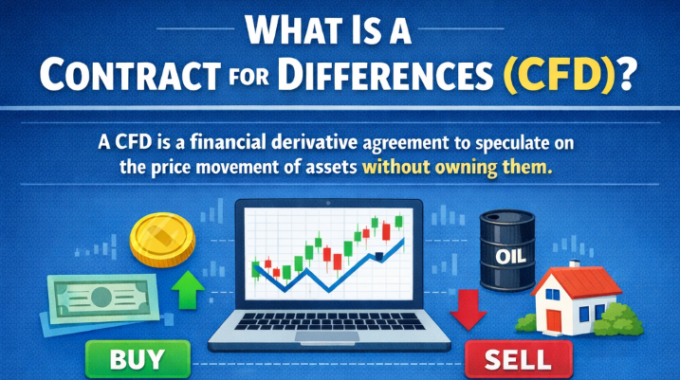
A contract for differences (CFD) is a financial agreement between a buyer and a seller in which the buyer pays the seller the difference between an asset’s current value and its value at the time the contract was entered into. Rather than taking ownership of the underlying asset, traders and investors use CFDs to profit from price movements alone — whether in stocks, forex, commodities, or indices.
Because the value of a CFD is determined purely by the change in price between entry and exit — not by the asset’s intrinsic worth — this instrument offers a flexible and cost-efficient way to participate in global markets. All transactions occur directly between the client and broker, bypassing traditional exchanges entirely.
How CFDs Work
When a trader opens a CFD position, they anticipate the direction of an asset’s price movement. If they believe the price will rise, they open a long (buy) position; if they anticipate a decline, they open a short (sell) position. Upon closing the trade, the net difference in price is either credited to or debited from the trader’s brokerage account. No physical asset ever changes hands.
Costs and Fees
Trading CFDs involves several costs: the spread (the difference between the bid and offer price), potential commissions, and overnight financing charges for positions held beyond a single trading day. For example, a broker may charge 0.10% commission per trade, plus a daily interest fee based on the total position value for long positions held overnight.
Advantages
CFDs carry several notable advantages. They offer higher leverage than most traditional instruments, allowing traders to control large positions with relatively little capital. They provide access to a wide range of global markets through a single platform, with no restrictions on short selling and no need to borrow underlying assets. Additionally, CFD brokers typically support a full range of order types — including stops, limits, and contingent orders — with professional execution standards.
Disadvantages and Risks
Despite their flexibility, CFDs carry meaningful risks. The spread cost erodes profitability on small price moves, and the leverage that amplifies gains can equally magnify losses. The CFD industry remains loosely regulated in many jurisdictions, meaning broker quality varies significantly. Traders must also maintain sufficient margin at all times; failure to do so may result in forced position closures. CFDs are therefore considered an advanced instrument, best suited to experienced traders who actively monitor their positions.
Geographic Availability
CFDs are available in numerous major markets including the United Kingdom, Australia, Germany, Singapore, Canada, and many others. However, they are prohibited for retail investors in the United States, where the Securities and Exchange Commission (SEC) has restricted their trading. Non-US residents are generally permitted to trade them freely through licensed brokers.
Conclusion
Contracts for differences offer a powerful and versatile tool for traders seeking exposure to a broad range of financial markets without the cost or complexity of direct asset ownership. Their high leverage, global accessibility, and flexibility make them appealing to active traders. However, these same features make CFDs inherently risky, particularly for those without a thorough understanding of market dynamics and risk management.
Anyone considering CFD trading should carefully research their broker, understand the full cost structure, and ensure they have adequate capital and experience before entering the market. As with all leveraged instruments, the potential for significant loss is real — and must be weighed carefully against the potential for reward.
Sources: Investopedia & Wikipedia

Related Posts